Problem
Vehicle data is difficult to trust when transport state, capture identity, and later interpretation are mixed together.
Actual state
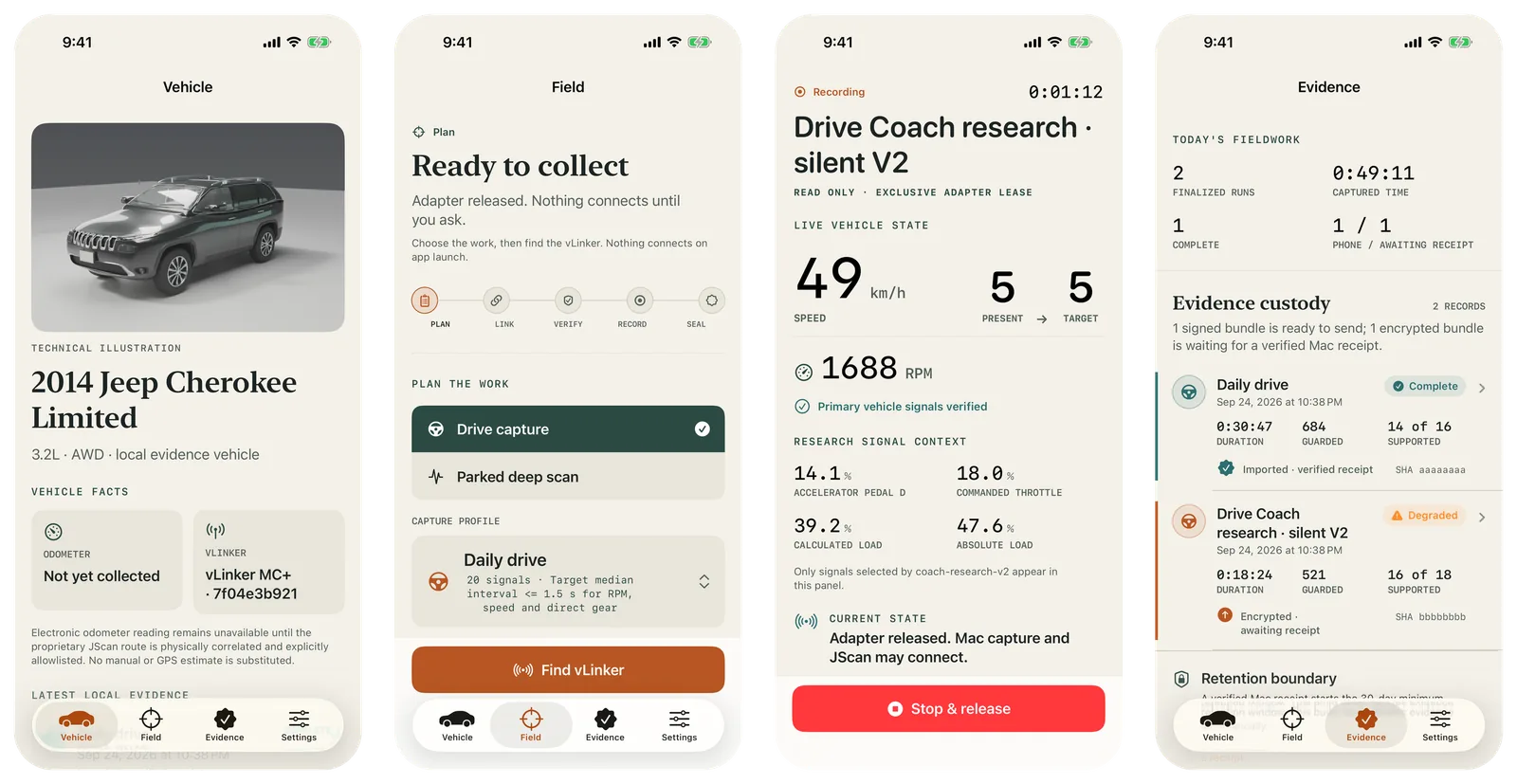
The Journal holds 149 accepted sessions and 546 immutable analysis results, and it adopted Vehicle Evidence on 22 September 2026. The iPhone recorder, version 1.1.13, is installed and signs its field evidence but is not yet the accepted primary recorder; the Android recorder passed real-vehicle acceptance and remains the backup.
System architecture
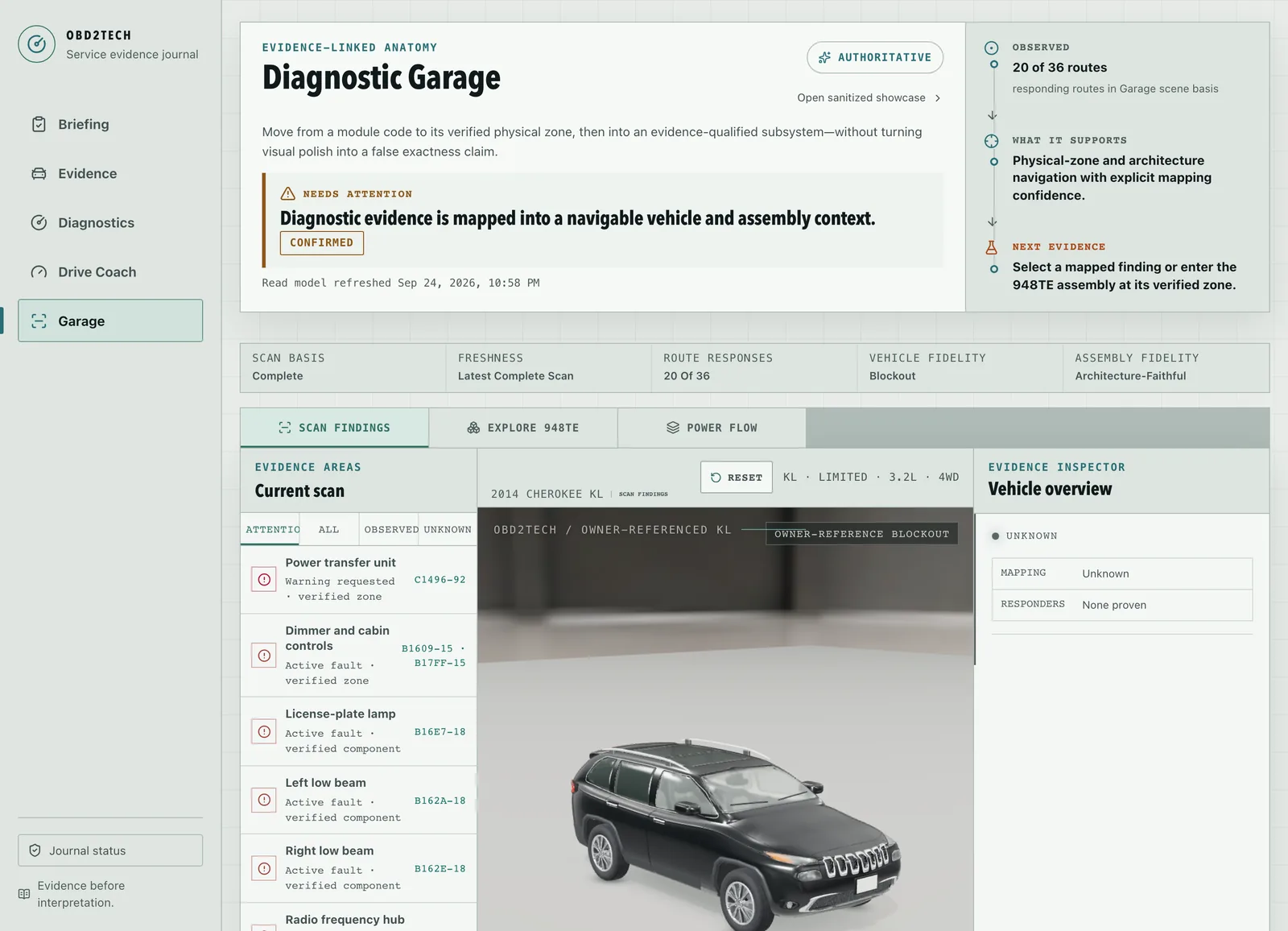
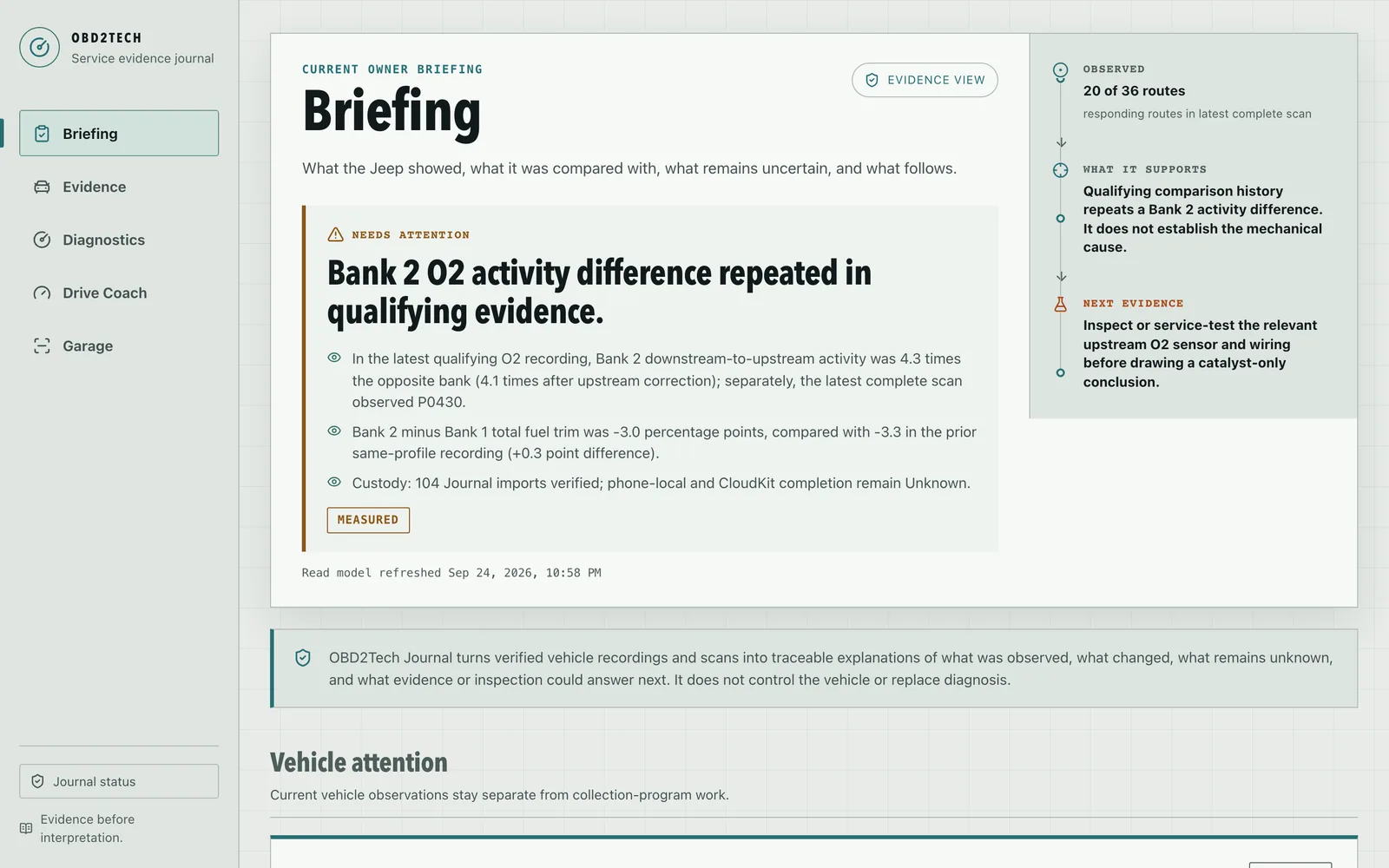
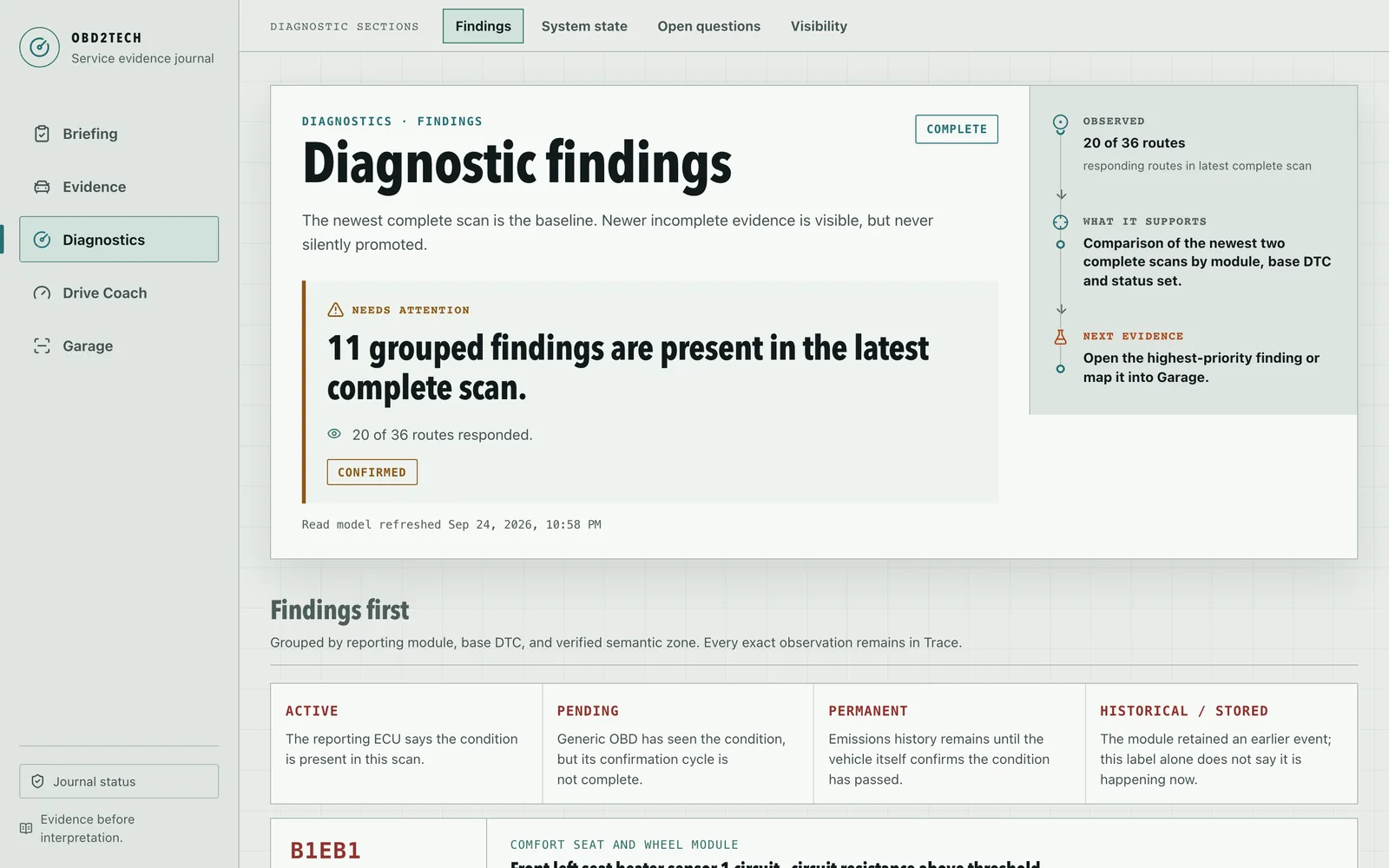
The iPhone app reads a Bluetooth OBD adapter through a read-only, exclusive lease and seals each run into a signed bundle. Bundles travel through CloudKit to a Mac relay and ingest app. The Journal, a Python engine with a read-only local dashboard, records provenance, runs immutable analyses, and maps findings onto a 3D vehicle and transmission model.
Christian's role
Designed the hardware-facing capture flow, transport controls, evidence receipts, journal model, and recovery procedures; directed the implementation and validated it against the owner's vehicle and simulator paths.
Verified evidence
Safety, privacy, and authority boundary
- The VIN stays private, and no GPS or route data is collected
- Diagnostic support is not a repair guarantee
- Capture and journal authorities remain distinct
- The Journal dashboard is read-only
Current limitation
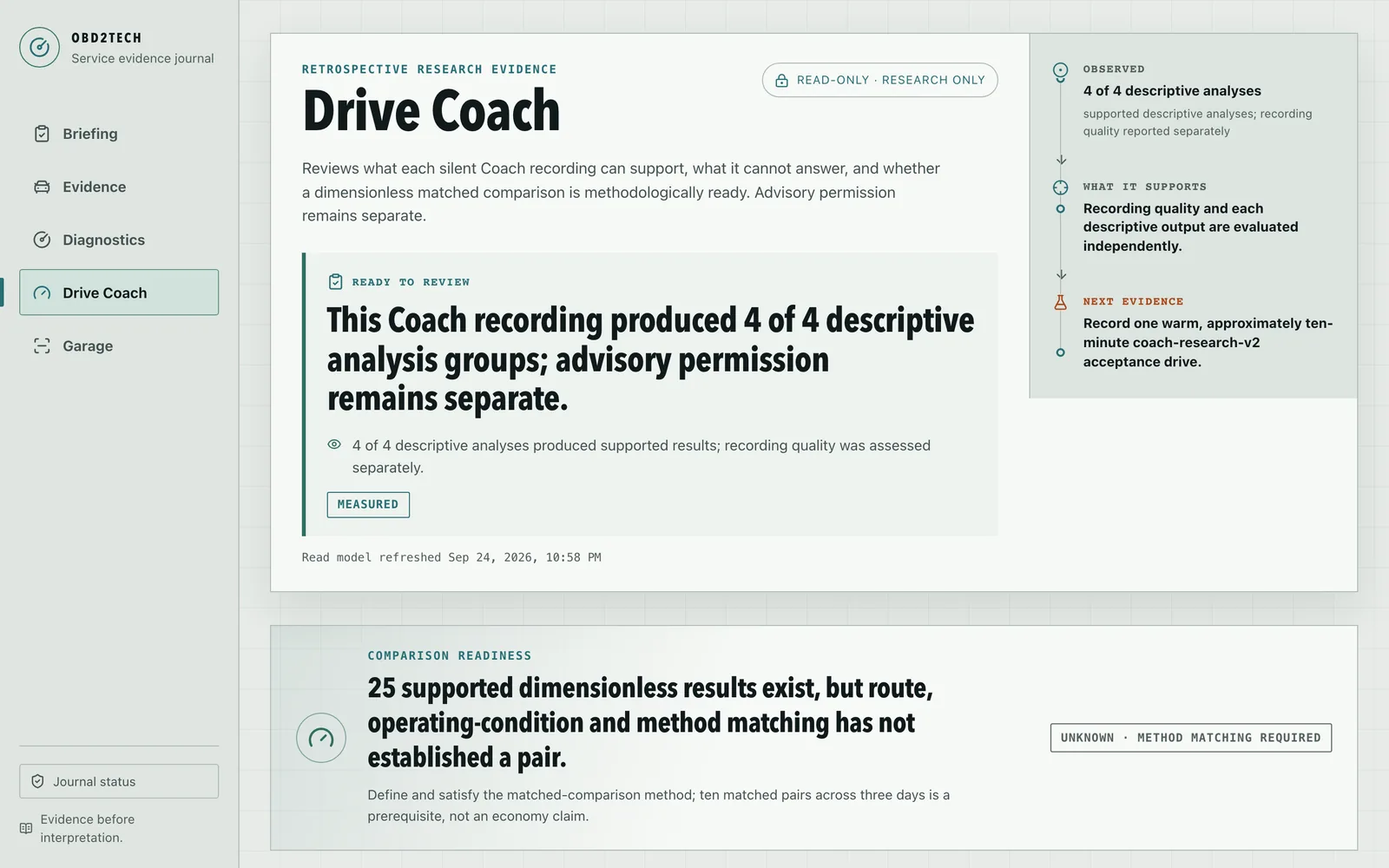
- The iPhone recorder is not yet the accepted primary recorder; one real Drive Coach V2 drive and odometer qualification remain open.
- The 3D garage is a source-calibrated blockout, not an exact CAD model, and the system is built around one owner's vehicle.
Next milestone
Record one real Drive Coach V2 acceptance drive.